
Insight
Are Stray currents a hazard for metal pipe systems?
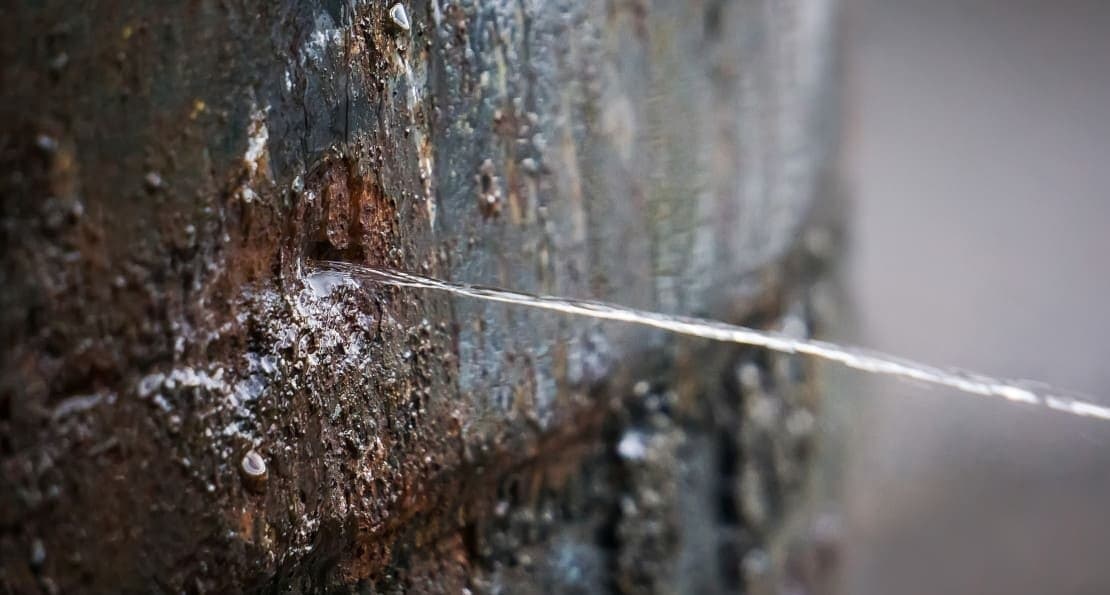
Stray currents are those currents that leave their “normal” path, i.e., the primary circuit, represented by normal electrical conductors, and then disperse into the ground and penetrate other metal structures, called secondary conductors.
When, after passing through a section of the metal pipe, such currents leak out again, corrosion occurs.
It should be specified that stray currents can cause damage only if they are direct current. In this regard, it is worth mentioning how the current in ordinary homes is not continuous, but alternating.
To this we must also add the fact that cement mortar offershigh electrical resistance. Consequently, when carefully analyzing the case of copper pipes, it is evident that there are numerous factors that drastically limit the occurrence of corrosion phenomena of this kind: corrosion from stray currents within dwellings, including undercurrent laying, is therefore actually very rare.
It may be appropriate in this regard to point out that cases of corrosion mistakenly attributed to stray currents almost always involve pipes carrying cold water and never gas heating pipes. If the cause really could be associated with stray currents, one would have to think that stray currents are so “intelligent” as to select the pipe to be nicked according to its use. Evidently not, it is, and that is why the cause of any corrosive phenomena is to be attributed to other reasons.
Confirming doubts about the real plausibility of stray currents, there are no cases of stray current corrosion inherent in copper piping in systems inside homes in SCTubes’ history.
In the 1970s, there was a case of external corrosion on piping in a building, but it occurred during construction, due to leakage currents from a welding machine that was not properly connected to the structure being welded.
The cause, in the few cases of corrosion (few especially as a function of the tens of millions of meters of copper pipe installed annually) must be sought elsewhere, for example, in an excessive amount of carbon deposits on the inner surface of the pipe; therefore, the first preventive (and common sense) measure is to purchase high quality pipes with low levels of carbon residues.
In this regard, we recall that SCUDO® copper pipe is manufactured through an in-house prepassivation production process that lowers carbonaceous residue contents by more than 70 percent compared to what EN 1057 prescribes.
To sum up, experience shows that corrosion by leakage currents inside buildings is limited to very rare episodes and certainly not decisive for material selection. Frequently, the alleged danger of this phenomenon is demonized, but the topic, in most cases, is exploited for less noble purposes than prevention.